
.jpg)
In 2020, led by Dr. Carl Berg, the Kauaʻi Chapter set out on an international collaborative effort to better understand a growing and largely overlooked threat washing up on Hawaiʻi’s shores: eel trap gear.
Six years later, the Kauaʻi Chapter is pleased to announce the publication of ʻSource Identification of Multinational Abandoned, Lost, or Discarded Fishing Gear from the Eel and Hagfish Trap Fisheries throughout the North Pacific Ocean’
This is a first-of-its-kind study that not only documents the scale of the problem, but traces it back to its source and points to real solutions.The study brought together researchers, citizen scientists, fishing communities, nonprofits, and government agencies across the United States, Japan, South Korea, and Taiwan. Tens of thousands of volunteers contributed to this effort.
The ocean does not know national boundaries, and neither can our response.
Read the Study Here
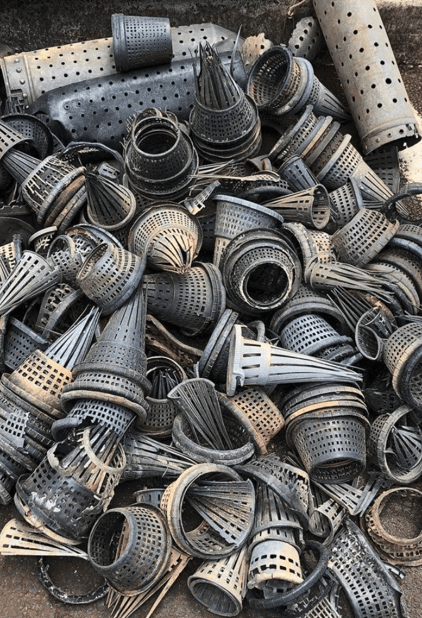
The Scale of the Problem is Staggering
Over the course of the study, more than 21,891 pieces of eel trap gear from across the Hawaiian Archipelago between 2021 and 2024, with a nearly six-fold surge in 2024 alone. Zooming out, the scale is staggering- an estimated 4 to 10 million pieces of eel trap gear are currently circulating in the North Pacific. What was once an occasional debris item has become a dominant and rapidly increasing presence on our coastlines.
Eel Trap Gear is Killing Wildlife at Every Level of the Food Chain
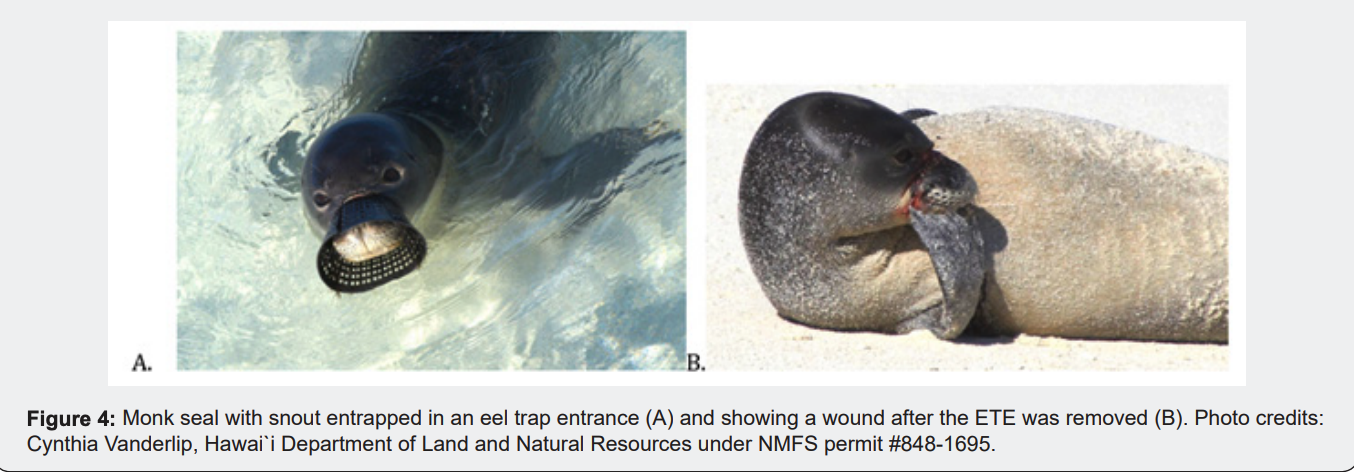
Eel trap gear is not passive debris—it continues to “ghost fish,” meaning long after its intended use, it actively captures and kills marine life. In Hawaiʻi, this gear has been directly linked to the deaths of endangered Hawaiian monk seal pups, whose small snouts can become fatally lodged in trap openings. A sperm whale was found with eel trap components blocking its digestive tract, likely leading to starvation. Sea turtles, dolphins, seabirds, and other protected species are routinely entangled.
Even when it sinks, the damage doesn’t stop. Lost traps continue to kill marine life on the seafloor, while breaking down into microplastics that leach hazardous chemicals—including phthalates, bisphenol A, and flame retardants—into the ocean, entering the marine food chain at every level.
We Now Know Where It's Coming From
Marine debris has often been framed as anonymous — a diffuse problem with no clear origin or accountability. This study shifts that narrative.
Using a novel forensic identification framework, researchers were able to trace eel trap gear from broad ocean basin patterns down to specific countries, manufacturers, and even fishing communities. The results point to large industrial fishing fleets operating in the East China Sea and Sea of Japan, with a significant contribution from South Korea and China.
This is not just gear lost at sea. Evidence suggests that millions of eel trap entrances are intentionally discarded each year as a cost-saving practice — cheaper to replace at sea than to properly store and dispose of on land.
The Path Forward: Stop the Flow, Then Cleanup What's There
While the scale of the problem is daunting, the study also highlights something equally important: solutions are already being implemented.
South Korea, identified as a major source of eel trap gear, is also leading on mitigation efforts. The government has implemented fleet reductions, developed biodegradable eel trap gear designed to sink and safely break down, and subsidized its adoption among fishermen. Public education campaigns are also helping shift practices within fishing communities.
The path forward must implement solutions must address both prevention and removal. This includes education programs delivered through fishing cooperatives to reach fishermen directly, mandatory gear marking to enable traceability and accountability, and accelerated adoption of affordable, non-toxic biodegradable eel trap gear. At the same time, community beach cleanup programs across the North Pacific are essential to remove gear already in the environment before it entangles or is ingested by marine life.
 Prior to her role as Hawai`i Regional Manager and Maui Fire Response Coordinator, Hanna has had a long history in non-profit leadership and environmental conservation in Hawai`i. With a Bachelor's degree in Biology she moved to Maui in 2013 where she spent the next decade working as a restoration technician.